The Church of Saint Thecla—an underground shrine near Silifke in Mersin

The Church of Saint Thecla—an underground shrine dedicated to the first Christian martyr of Cilicia

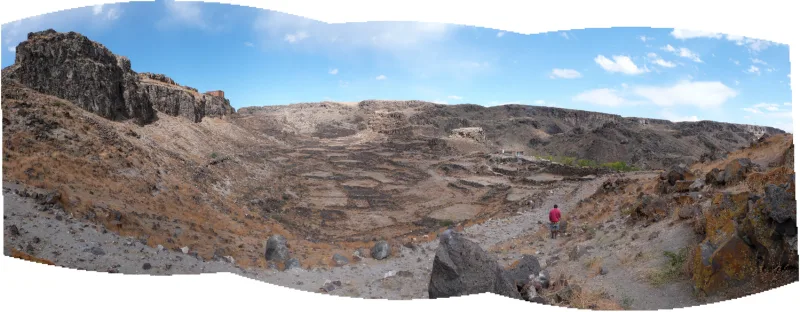
Four kilometers south of Silifke, on the hill of Meryemlik (“belonging to the Virgin Mary”), lies one of the most unusual early Christian pilgrimage sites in the Mediterranean. According to legend, Saint Thecla—the first female martyr of the Christian Church and a disciple of the Apostle Paul—spent the last years of her life here in a cave and was buried here. The Church of Aya Tekla (Aya Tekla Kilisesi) is not merely ruins, but a site that has been visited by pilgrims since the 4th century: the famous traveler Egeria came here in 384, and Gregory of Nazianzus prayed here. The Church of Aya Tekla gave its name to an entire complex of structures: an underground cave church, a grand basilica, a domed church, baths, and cisterns—all of which sprang up around the single grotto where, according to legend, the saint disappeared.

History and Origin of the Church of Aya Thekla

Thecla (Θέκλα) is a character in the “Acts of Paul and Thecla” (Acta Pauli et Theclae), an apocryphal text from the 2nd century. According to tradition, she was a young woman from Iconium (now Konya) who heard the Apostle Paul’s sermon and became his follower. Having refused the marriage arranged for her by her family, Thecla endured several attempts at execution—she was thrown into the fire and thrown to wild beasts, but she miraculously survived. After her wanderings, Thecla settled in the vicinity of Seleucia (Silifke) and spent her final years there in a cave on a hill. According to the Turkish Wikipedia, when she was attacked once again, the earth opened up and swallowed her: she literally “disappeared into the ground.”

Until 312, the cave served as a secret place of worship for Christians persecuted by the Roman authorities. After the Edict of Milan in 313, which legalized Christianity, the cult of Thecla flourished openly. In 374, Gregory of Nazianzus (Gregorius Nazianzenus) visited this site. In 384, Egeria, a pilgrim who left a detailed account of her journey (“Itinerarium Egeriae”), came here. She recorded that numerous monastic cells for men and women were located around Thecla’s martyrion, and that the martyrion itself was situated inside a walled church.

In 460–470, by decree of Zeno Isaurian (reigned 474–491), the Great Basilica of Thecla—a three-nave structure and the largest in Cilicia at the time—was erected on the hilltop. Some of the complex’s other structures—a domed church, baths, and cisterns—are also attributed to Zeno or his era. In 1903, the German architectural historian Josef Stschigowski wrote the now-famous phrase: “Meriamlik muss ausgegraben werden” (“Meriamlik must be excavated”). This phrase is still cited in academic literature today. German researchers Ernst Herzfeld and Samuel Guyer conducted a three-week partial excavation, which made it possible to reconstruct the plans of the main buildings. Today, architectural historian Metin Akhunbay is conducting surface surveys.

Architecture and What to See

The Meryemlik complex includes several separate structures scattered across the hillside. All of them are connected in one way or another to the cult of Saint Thecla.

Underground Cave Church (Yeraltı Kilisesi)

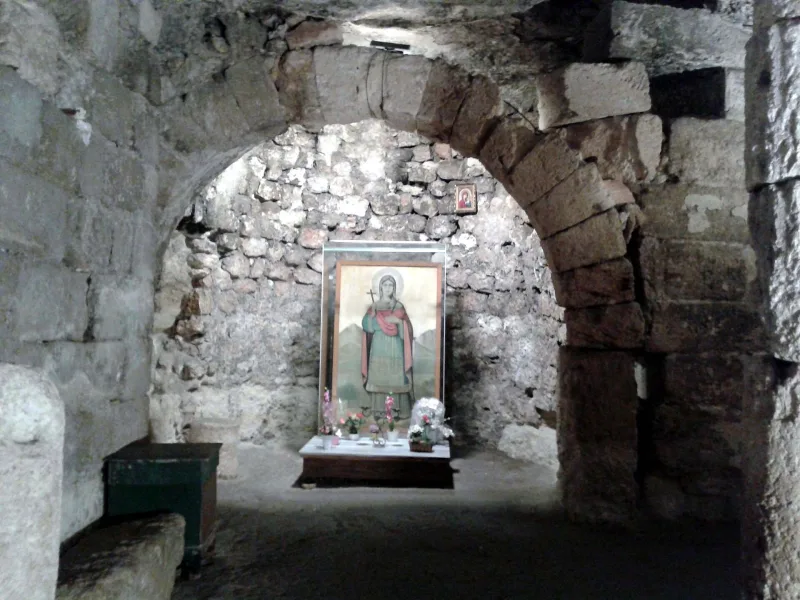
This is the main attraction for visitors. The cave, which according to legend served as Thecla’s final refuge and tomb, was converted into a church at some point in early Christian history. Today it is equipped with electric lighting and a staircase leading down. Fragments of stone walls and the vault have been preserved inside. In the cave and to the north of it, ancient cisterns have partially survived—researchers believe they supplied pilgrims with healing water.

The Great Basilica of Thecla

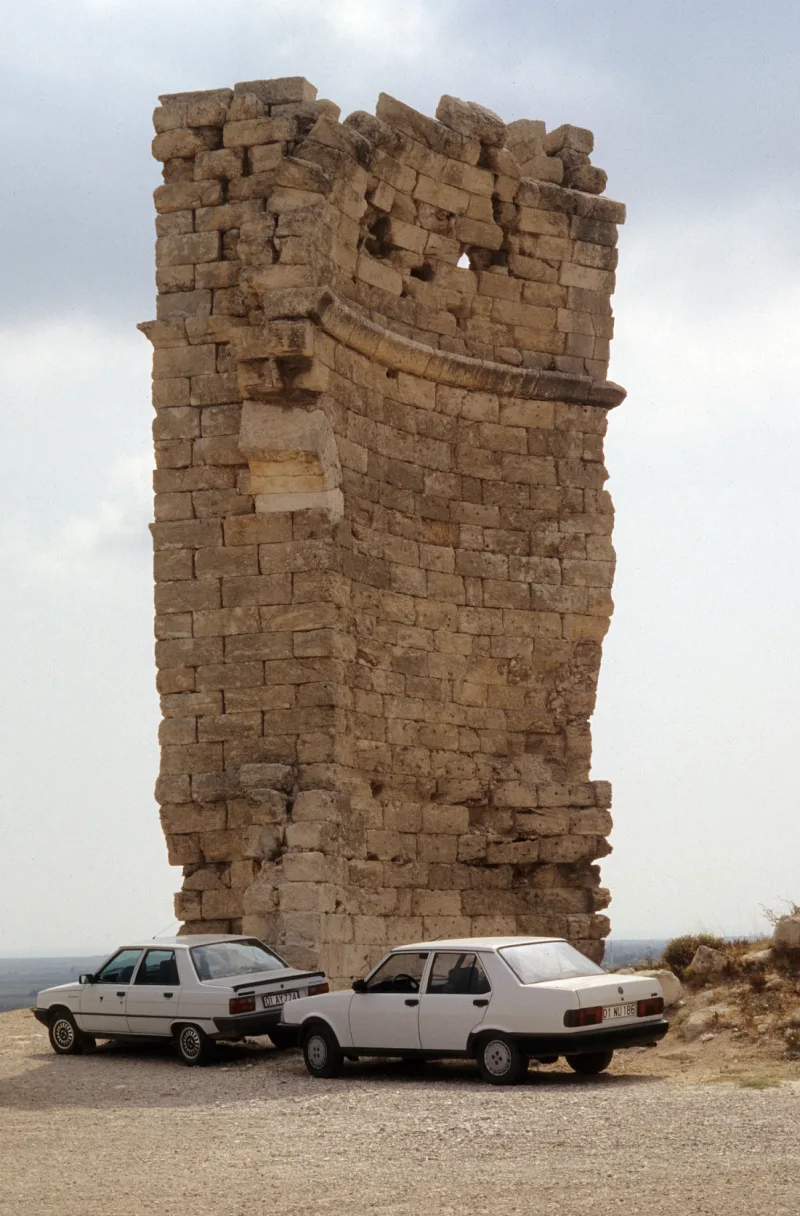
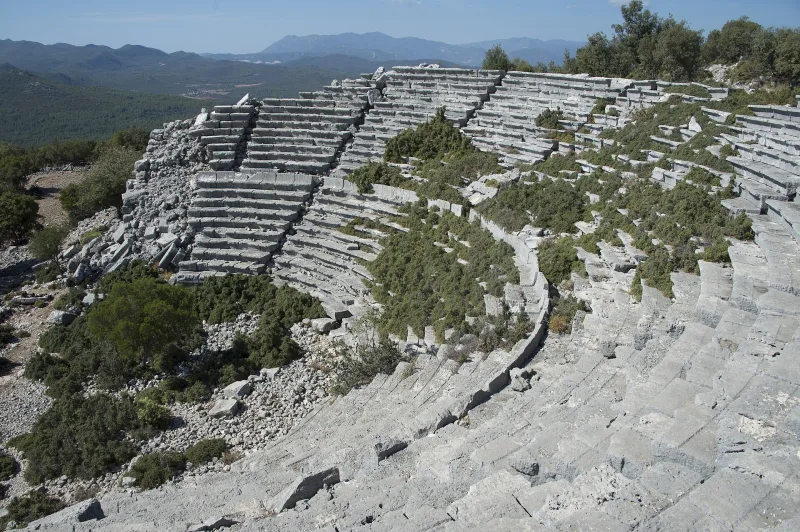
At the top of the hill stand the ruins of a 5th-century three-nave basilica—the largest church in Cilicia of its time. Only part of the apse remains of the entire building—the eastern wall, its end pointing skyward. It is this fragment that is usually photographed against the backdrop of the blue Mediterranean horizon. You can get a sense of the basilica’s original scale by walking around the perimeter of the foundation: the building was enormous.

The “Dome Church”

A separate point of contention within the complex is the so-called “domed church.” According to modern research, it did not have a dome: presumably, the nave was covered by a conical wooden canopy for structural reasons. The building is oriented around an elliptical atrium; from the atrium, a tribelon (three-arched gate) leads into the interior. In the eastern part of the structure, where the terrain slopes downward, cellars with vaulted ceilings are located beneath the apse and pastophoria.

The North Church

The first church a traveler coming from Silifke sees is the North Church. Built in 460–470, it is a three-aisled structure, yet little studied: there is almost no information about it in the sources.

Cisterns and Baths

Traces of up to ten cisterns have been identified in various parts of the complex. Some of them are built of brick—a material atypical for Cilicia, indicating the unique building traditions of this late-antique pilgrimage center. According to researchers, these cisterns stored “healing” water for pilgrims. The bathhouse, still partially buried underground, is located between the cisterns and the “domed” church—evidently, pilgrims performed ritual ablutions here before visiting the cave.

Interesting Facts and Legends

  • Egeria—a 4th-century pilgrim whose “Pilgrimage Diary” is considered one of the most important documents of early Christian geography—visited Thekla in 384. Her description of the monastic cells and the martyrion is the only contemporary account of the complex’s appearance during that era.
  • According to legend, during the last attempt on Thecla’s life, the earth literally split open and swallowed her—which is why the cave is considered both her refuge and her tomb at the same time. This motif of “disappearing into the earth” is characteristic of the hagiography of early Christian martyrs.
  • In 1903, Josef Stszigowski wrote: “Meriamlik muss ausgegraben werden” (“Meriamlik must be excavated”). More than 120 years later, systematic excavations have still not been carried out—Meriamlik Hill continues to await its moment.
  • The name of the hill, “Meryemlik”—“belonging to the Virgin Mary”—apparently emerged as early as the Christian era and demonstrates how the cult of Thecla merged with the later veneration of the Virgin Mary: two female figures of the early church came together in a single place name.
  • The Basilica of Zeno was not merely a church but also a political gesture: Zeno Isaurian hailed from Isauria—a mountainous region of Cilicia near Meryemlik. By building the region’s largest church on the site of Thecla’s cult, he simultaneously glorified his homeland and demonstrated imperial piety.

How to get there

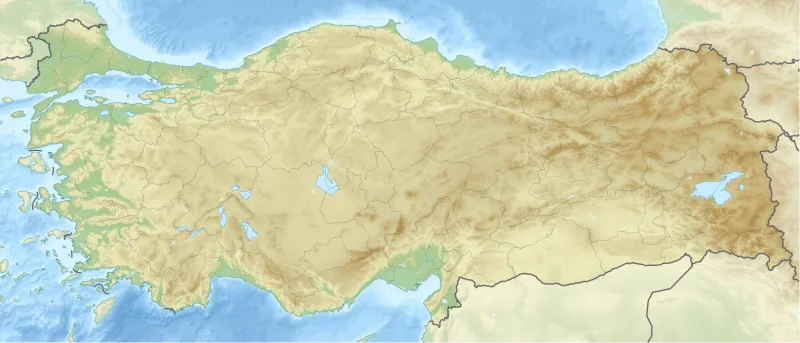
The Church of Aya Tekla is located 4 km south of Silifke in the province of Mersin. Coordinates: 36°21′47″ N, 33°55′51″ E. From Highway D400 (Mersin–Silifke), turn off and follow the paved road for 1 km; there is also a road from Silifke via Highway D715.

The nearest airport is Adana Şakirpaşa (ADA), about 120 km to the east. From Adana to Silifke, take a bus (about 1.5–2 hours); from Mersin to Silifke, the bus ride takes about 1 hour. From Silifke to the complex, it is more convenient to take a taxi (about 5–7 minutes). By car, take the D400 toward Silifke, then follow the signs for “Aya Tekla.” The complex is managed by the Ministry of Culture and Tourism; there is an admission fee.

Tips for travelers

Plan to spend 2–3 hours at the complex: the cave church, the basilica ruins, and a walk up the hill take time. Bring a flashlight—there is electric lighting in the cave, but it is difficult to see the lower niches without an additional light source. Wear shoes with non-slip soles: the descent into the cave is via stairs, and the stone paths on the hill are slippery when wet.

The best time to visit is spring (April–May) and fall (October–November). It gets hot in the open ruins during the summer; however, it’s always cool inside the cave—bring a light jacket. Come in the morning: there aren’t crowds at Aya Tekla, but the early hours are always quieter and the light is better for photos.

Combine your visit with other attractions in Silifke and the surrounding area: Silifke Castle (Silifke Kalesi), the Silifke Museum with its ancient artifacts, Tashuj with its Amphora Museum, and the route to Cyprus. For those interested in early Christianity, a visit to Ayat Tekla can be combined with a visit to the Basilica of Saint Tekla in Tarsus and the Adana Catacombs—as part of a single itinerary following in the footsteps of the Apostle Paul. Remember: The Church of Aya Tekla is one of the oldest pilgrimage centers of the Christian world in Turkey, and even if you are not a believer, the atmosphere of this place compels you to slow down and listen to the voice of twenty centuries.
Your comfort is important to us, click on the desired marker to create a route.
Meeting for minutes before
Yesterday. 17:48
Frequently asked questions — The Church of Saint Thecla—an underground shrine near Silifke in Mersin Answers to frequently asked questions about The Church of Saint Thecla—an underground shrine near Silifke in Mersin. Information about the service's operation, capabilities, and use.
Thecla is a character from the 2nd-century apocryphal text *The Acts of Paul and Thecla*. According to tradition, she was a young woman from Iconium (modern-day Konya) who heard the Apostle Paul preach, became his follower, and renounced the marriage that had been arranged for her. After several miraculous escapes from execution, she settled in the vicinity of Seleucia (Silifke) and spent her final years in a cave on Mount Meryemlik. According to legend, when she was attacked once again, the earth opened up and swallowed her—which is why the cave is considered both her refuge and her tomb. Thecla is venerated as the first female martyr of the Christian Church.
"Meryemlik" translates from Turkish as "belonging to the Virgin Mary." The name appeared during the Christian era and reflects an interesting fusion of two female figures from the early church: the cult of Thecla eventually became intertwined with the veneration of the Virgin Mary, and both cults merged into a single place name. This is a characteristic example of how early Christian pilgrimage centers accumulated multiple layers of veneration.
The Great Basilica was built between 460 and 470 by decree of Emperor Zeno Isaurian and was the largest three-nave church in Cilicia at the time. Zeno was a native of Isauria—a mountainous region near Meryemlik—so the construction of the basilica on the site of the cult of Thecla was both a religious and political gesture: a celebration of his homeland and a demonstration of imperial piety. Today, only part of the basilica’s apse remains—the eastern wall, which is often photographed against the backdrop of the Mediterranean horizon.
The cave is equipped with electric lighting and a staircase leading down. Inside, fragments of stone walls and the vaulted ceiling have been preserved. To the north of the cave, ancient cisterns have partially survived; researchers believe these were used to store healing water for pilgrims. The lower niches of the cave are difficult to see even with electric lighting, so it is recommended to bring a flashlight—this will allow you to examine details that would otherwise remain in the shadows.
Contrary to its name, modern research indicates that this structure did not have a dome: presumably, the nave was covered by a conical wooden roof for structural reasons. The building is oriented around an elliptical atrium; from the atrium, a tribelon—a three-arched gateway—leads into the interior. In the eastern part of the structure, beneath the apse and the pastophoria, there are cellars with barrel vaults. This is one of the complex’s most controversial architectural features, which researchers are still studying.
In 374, Gregory of Nazianzus (Gregorius Nazianzenus) visited the complex. In 384, the pilgrim Egeria came here and left a detailed account in *Itinerarium Egeriae*—one of the most important documents of early Christian geography. She noted that monastic cells for men and women were located around the martyrion of Thecla, and that the martyrion itself was situated inside a walled church. This is the only contemporary description of the complex’s appearance from that era.
No systematic, large-scale excavations have ever been conducted on Meriamlik Hill. In 1903, the German architectural historian Josef Strzygowski wrote the famous phrase: “Meriamlik muss ausgegraben werden” (“Meriamlik must be excavated”). More than 120 years later, his call remains unfulfilled. A three-week partial excavation by German researchers Ernst Herzfeld and Samuel Guyer made it possible to reconstruct the plans of the main buildings. Today, architectural historian Metin Akhunbay continues the surface surveys.
Yes, Ayatekla is one of the oldest active pilgrimage sites in the Christian world located in Turkey. Worship of Saint Tekla has been documented here since the 4th century, meaning the site has been venerated continuously for over sixteen centuries. The cave church is open to visitors and retains the atmosphere of an early Christian shrine. The site attracts both Orthodox and Catholic pilgrims, as well as anyone interested in the history of early Christianity.
Yes, the complex is managed by the Turkish Ministry of Culture and Tourism, and there is an admission fee. We recommend checking the exact ticket price on the official website or at the venue just before your visit, as prices are subject to change. If you have a Müze Kart, be sure to bring it with you—it may entitle you to free or discounted admission.
This tour can be conveniently combined with a visit to Silifke Castle (Silifke Kalesi) and the Silifke Museum, which houses ancient artifacts. In Tashucu, not far from Silifke, there is the Amphora Museum. For those interested in early Christianity and the traces of the Apostle Paul, the itinerary can be extended to include the Basilica of Saint Thecla in Tarsus and the Adana Catacombs. All these sites are part of a single itinerary through Cilicia and can be visited in two or three days.
The state of preservation of the complex’s structures varies. The underground cave church is open to visitors and equipped with lighting. Only part of the apse of the Great Basilica of Zeno has survived—it makes a strong impression, but the building’s overall scale must be reconstructed based on the perimeter of the foundation. The “Dome” Church and the North Church are ruins in varying states of preservation. Some of the structures, including the bathhouse, are still partially buried underground—which is precisely why researchers have long been calling for a full-scale excavation.
User manual — The Church of Saint Thecla—an underground shrine near Silifke in Mersin The Church of Saint Thecla—an underground shrine near Silifke in Mersin User Guide with a description of the main functions, features, and principles of use.
The nearest major airport is Adana Şakirpaşa (ADA), located about 120 km east of the resort. Buses run from Adana to Silifke—the trip takes about 1.5–2 hours. If you’re traveling from Mersin, the journey to Silifke will take about an hour. If traveling by car, take the D400 highway (Mersin–Silifke direction), then follow the signs for “Aya Tekla.” The most convenient way is to include Aya Tekla in a route along the Cilician coast, combining it with other attractions in Silifke.
The complex is located 4 km south of the center of Silifke. From the D400 highway, turn off and drive about 1 km along a paved road; there is also an access road from Silifke via the D715 highway. The most convenient way to get there is by taxi from the bus station or the center of Silifke—the trip takes about 5–7 minutes and is inexpensive. There is no public transportation running directly to the complex, so a taxi or private car is the best option.
Purchase a ticket at the entrance—the site is managed by the Turkish Ministry of Culture and Tourism. Wear shoes with non-slip soles: the descent into the cave is via a staircase, and the stone paths on the hill become slippery in wet weather. Bring a flashlight—despite the electric lighting, the lower niches of the cave are difficult to see without an additional light source. In the summer, bring a light jacket: it’s always cool in the cave, even in the heat.
Start with the main attraction—the underground cave church (Yeraltı Kilisesi). Descend the stairs and examine the fragments of the stone walls and vaulted ceiling. Pay special attention to the lower niches—that’s where the details are best preserved, though they require additional lighting. North of the cave, you can see the partially preserved cisterns. Take your time: the cave is small, but the atmosphere takes time to appreciate—pilgrims have been praying here since the 4th century.
After visiting the cave, head up to the ruins of the Great Basilica at the top of the hill. Walk around the perimeter of the foundation to get a sense of the building’s original scale—it’s impressive even in ruins. Take a photo of the surviving part of the apse against the backdrop of the Mediterranean horizon. Then explore the “domed” church with its elliptical atrium and the North Church. Stone paths connect the sites; allow at least an hour to walk around the hill.
For a thorough tour of the complex—including the cave church, the basilica, the “dome” church, the North Church, the cisterns, and a walk up the hill—we recommend setting aside 2–3 hours. Come in the morning: there are no crowds at Ayia Tekla, but the early hours offer the best light for photos and a more peaceful atmosphere. The best seasons are spring (April–May) and fall (October–November): it gets hot in the open ruins in the summer, though it’s always cool inside the cave.