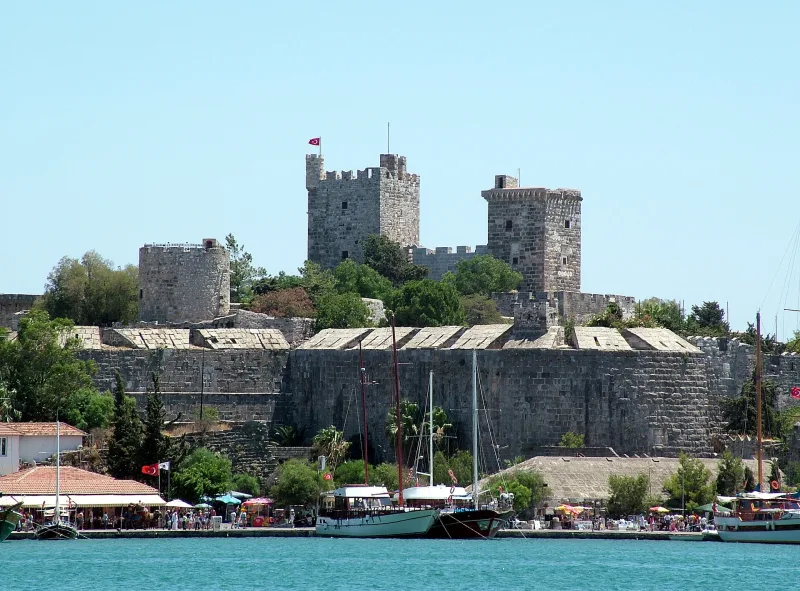
Çeşme Castle is an Ottoman fortress and museum on the Aegean Sea

Çeşme Castle is an Ottoman citadel on the shores of the Aegean Sea

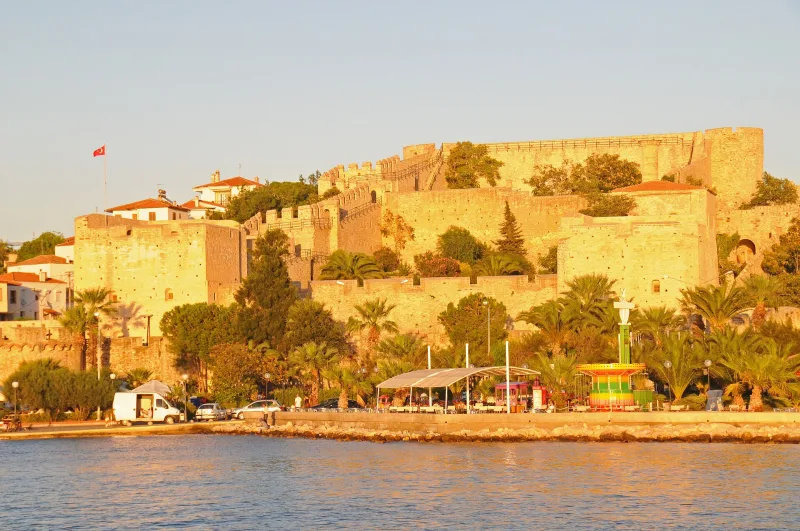
Çeşme Castle (Çeşme Kalesi) is the main historical landmark of the resort town of the same name in the western part of İzmir Province. This 16th-century Ottoman fortress stands directly on the waterfront, just a few meters from the sea, and blends perfectly into the picturesque seaside landscape with its white houses and sailboats. Today, the castle walls house the Çeşme Archaeological Museum, while the fortress itself remains one of the symbols of the entire Çeşme Peninsula and the venue for an international music and dance festival.

History and Origin

The city of Çeşme (from the Persian/Turkish çeşme, meaning “fountain, spring”) grew up on the site of the ancient port of Cyssus, mentioned as early as by Herodotus. In the Middle Ages, the coast was under the control of Byzantium, then Genoa; some elements from the Genoese period have survived in Çeşme and are now incorporated into the later masonry of the Ottoman fortress.

The castle itself was built in 1508 by decree of Sultan Bayezid II under the supervision of the sultan’s architect. Construction took place amid a growing threat from the Venetian Republic and the Holy League: the Ottomans sought to fortify the Aegean coast and ensure the safety of trade routes. Çeşme Castle became one of the links in a chain of coastal fortresses, along with the castles of Bodrum, Karaburun, and Sığacık.

The Battle of Çeşme

The fortress witnessed one of the most dramatic episodes in the history of the Eastern Mediterranean—the naval battle of Çeşme on July 5–7, 1770. The Russian Baltic Fleet, under the command of Count Alexei Orlov and Admiral Grigory Spiridov, including the famous British Rear Admiral Samuel Greig, routed the Ottoman fleet in Çeşme Bay. The Turkish squadron, pinned against the shore, was set ablaze by fire ships; thousands of sailors and dozens of ships perished in the flames.

This battle proved to be a turning point in the Russo-Turkish War of 1768–1774 and led to the signing of the Treaty of Küçük Kaynarca, which granted concessions to Russia. In memory of the victory, the Chesma Palace and the Chesma Church were erected in St. Petersburg, and the name “Chesma” (the Russian variant) became part of Russian military glory.

Museum and Restoration

In the 20th century, the castle lost its military significance and gradually fell into disrepair. In the 1980s, Turkish restorers rebuilt the walls and towers, and in 1984, the Çeşme Archaeological Museum was opened in the castle. Inside, the museum displays artifacts from excavations at the cities of Erythrai, Teos, and Cyssus, as well as from underwater archaeological work in the bays of the peninsula.

Architecture and What to See

Çeşme Castle has an irregular rectangular layout with six corner and intermediate towers. The walls are approximately 200 meters long along the perimeter and up to 4 meters thick. The masonry is made of hewn limestone with reused ancient and Byzantine stones. The castle is open daily from 8 :30 to 18 :00 (from October to March until 17 :00); admission is charged, with tickets costing around 60–100 Turkish lira.

Main Gate

The main gate is located on the north side and is decorated with a marble plaque bearing the tuğra of Sultan Bayezid II and the date of construction. In front of the gate stands a bronze monument to Admiral Hasan Pasha of Algiers (Cezayirli Gazi Hasan Paşa)—an Ottoman commander who survived the Battle of Çeşme and later became Grand Vizier.

Towers and Walls

Of the castle’s six towers, the northeast tower is particularly interesting—it offers a panoramic view of Çeşme Bay and the Greek island of Chios, 12 kilometers from the shore. The walls have retained their crenellated parapets and embrasures for cannons and muskets; in several places, one can see the remains of Ottoman cannons from the 16th–18th centuries.

Archaeological Museum

The museum’s exhibition occupies several rooms located in the barracks within the walls. The first hall is dedicated to the Bronze Age and features finds from the excavations at Limantepe and Bağlararası—the oldest settlements on the Aegean coast. The second hall features ancient finds from Eretria and Kissa: marble statues, pottery, coins, and fragments of inscriptions. The third hall covers the Byzantine period, featuring icons, amphorae, and crosses. Of particular interest is the collection of underwater artifacts: amphorae, anchors, and fragments of ancient ships recovered from the bottom of the bay.

Inner Courtyard

The courtyard features a small garden with flower beds and stone benches. Here you’ll also find several marble sarcophagi and columns that were reused in the castle’s construction. Particular attention is drawn to an old Ottoman cannon bearing the coat of arms of Sultan Suleiman I—it is positioned opposite the northern wall and aimed “toward the enemy”—that is, Chios.

Nearby Caravanserai

A few dozen meters from the castle stands the Kanuni Sultan Süleyman Caravanserai (Kanuni Sultan Süleyman Kervansarayı), built in the 16th century. Today it is a boutique hotel, but anyone can enter the courtyard to admire the majestic arcade and fountain. The caravanserai and the castle form the historic ensemble of the Çeşme waterfront.

Interesting Facts and Legends

  • The Battle of Çeşme in 1770 went down in naval history textbooks as the first instance of the massive use of fire ships in the age of the sailing fleet.
  • One of the castle’s towers houses an exact replica of Russian Admiral Spiridov’s flag, donated to the museum in 2010.
  • In the 1830s, the castle served as barracks for a detachment of the Ottoman army that guarded the peninsula against pirates and Greek rebels.
  • Among the finds of the archaeological museum is a rare collection of Hellenistic-era gold jewelry discovered in a tomb near the neighboring village of Şifne.
  • Çeşme Castle appears in modern Turkish literature and cinema as a symbol of a “frozen era”—the TV series “Kiss Me, Don’t Say Goodbye” (Beni Affet) was filmed here.
  • Every August, the castle hosts the Çeşme International Song Festival—a tradition dating back more than 50 years.
  • On the castle walls, you can find inscriptions scratched into the stone from the 18th and 19th centuries in Greek and Italian—left by captive sailors and merchants.

How to get there

Çeşme Castle is located in the very center of Çeşme, on the waterfront near the pier where ferries to the Greek island of Chios dock. It is about 100 kilometers from Adnan Menderes International Airport (İzmir) to Çeşme—a 1-hour 15-minute drive on the O-32 expressway. From the center of Izmir, the drive takes about 1 hour on the same route.

Without a car, the most convenient option is by bus: regular services operated by Çeşme Seyahat and Pamukkale depart every 30–45 minutes from the İzmir Otogar bus station. A Havaş shuttle runs from Izmir Airport to the Çeşme bus station. Those who enjoy sea travel can arrive by ferry from the island of Chios—the ferry docks 200 meters from the castle. Parking at the fortress is paid and fills up quickly during the high season.

Tips for travelers

The best time to visit is April–June and September–November. It gets hot in Çeşme in the summer (up to 35°C), but this is when the festival takes place and the waterfront is at its liveliest. In the winter, the castle and museum are open, but many nearby hotels and cafes close for the off-season.

Allow 1.5–2 hours to explore the castle and museum. Bring water, a hat, and comfortable shoes—the stone steps and railings can be slippery at times. Photography is permitted in the museum without a flash. It’s family-friendly: there are shaded areas and play zones inside, and from the towers you can show your child the “Sea of Orlov.”

Combine your visit to the castle with a stroll through the old town of Çeşme, a tour of the caravanserai, a trip to the Alaçatı peninsula with its windsurfing and wineries, as well as the beaches of Ilıca and Çiftlikköy. A culinary must-try is the local Çeşme kumru (a sandwich with sausage, cheese, and tomatoes) and mastic ice cream (sakızlı dondurma) with pieces of resin from the Chios mastic tree. Çeşme Castle is the perfect starting point for exploring one of the most beautiful corners of Turkey’s Aegean coast.
Your comfort is important to us, click on the desired marker to create a route.
Meeting for minutes before
Yesterday. 17:48
Frequently asked questions — Çeşme Castle is an Ottoman fortress and museum on the Aegean Sea Answers to frequently asked questions about Çeşme Castle is an Ottoman fortress and museum on the Aegean Sea. Information about the service's operation, capabilities, and use.
Çeşme Castle was built in 1508 by order of Sultan Bayezid II. Construction was carried out under the supervision of the sultan’s architect amid threats from the Venetian Republic and the Holy League. The Ottomans sought to fortify the Aegean coast and protect trade routes. The castle became part of a chain of coastal fortresses alongside Bodrum, Karaburun, and Syagik.
In July 1770, the famous Battle of Chesma took place right outside the castle walls: the Russian Baltic Fleet, under the command of Count Alexei Orlov and Admiral Grigory Spiridov, routed and burned the Ottoman fleet in the bay. This battle proved to be a turning point in the Russo-Turkish War of 1768–1774. To commemorate the victory, the Chesma Palace and the Chesma Church were erected in St. Petersburg. The castle museum houses a replica of Admiral Spiridov’s flag, which was donated in 2010.
Today, the walls of Çeşme Castle house the Çeşme Archaeological Museum, which opened in 1984. The exhibition occupies several rooms in the former barracks. The first room is dedicated to the Bronze Age, the second to ancient finds from Erythrai and Cyssus: marble statues, pottery, and coins. The third room covers the Byzantine period. The collection of underwater artifacts—amphoras, anchors, and ship fragments recovered from the bottom of the bay—deserves special attention.
Çeşme Castle is open daily: from April to September, from 8 :30 to 18 :00; from October to March, until 17 :00. Admission costs approximately 60–100 Turkish lira. We recommend checking the official websites for current prices and opening hours before your visit, as they may vary depending on the season.
Yes, that is correct. The castle walls are built of hewn limestone, though they also incorporate reused ancient and Byzantine stones. Çeşme grew up on the site of the ancient port of Cyssus, and during the Middle Ages, the coastline was controlled by Genoa. Certain Genoese elements were incorporated into the later Ottoman structure, making the castle’s architecture a layered historical testament.
The northeast tower is particularly interesting: it offers a panoramic view of Çeşme Bay and the Greek island of Chios, located just 12 kilometers off the coast. The walls still feature crenellated parapets, embrasures for cannons and muskets, as well as the remains of Ottoman cannons from the 16th–18th centuries. In the inner courtyard stands an old cannon bearing the coat of arms of Sultan Suleiman I, pointed toward Chios.
Every August, Çeşme Castle hosts the Çeşme Festival, an international song festival with a history spanning more than 50 years. In addition, the castle is one of the city’s landmarks and a venue for cultural events. If you’re planning a visit in August, be sure to check the festival schedule in advance: access to the grounds may be restricted or subject to change during the festival.
Yes, just a few dozen meters from the castle stands the Kanuni Sultan Süleyman Kervansarayı—a majestic 16th-century Ottoman caravanserai. Today it operates as a boutique hotel, but anyone can enter the inner courtyard with its arcade and fountain. Together, the castle and the caravanserai form the historic ensemble of the Çeşme waterfront. Also nearby are the ruins of the ancient cities of Eretria and Kissa.
The castle walls still bear inscriptions scratched into them from the 18th and 19th centuries in Greek and Italian. According to historians, these were left by captive sailors and merchants held in the fortress. In addition, the main gate is adorned with a marble slab bearing the tughra—the personal monogram—of Sultan Bayezid II and the date of construction.
Yes, Çeşme Castle is a great place for a family visit. Inside, there are shaded areas and a small garden with benches where you can relax. From the towers, children can admire the sea panorama and the Greek island of Chios—a great visual introduction to history. Keep in mind that the stone steps and railings can be slippery in places, so comfortable, closed-toe shoes are a must for all family members.
Combine your visit to the castle with a stroll through the old town and a tour of the Kanuni Sultan Süleyman Caravanserai. Just a 30-minute drive away is the Alaçatı Peninsula, known for its windsurfing and wineries. The beaches of Ilıca and Çiftlikköy are within walking distance. Be sure to try kumru—a sandwich with sausage, cheese, and tomatoes—and sakızlı dondurma, mastic ice cream made with Chios mastic resin.
Photography is permitted at the Çeşme Archaeological Museum, but without a flash—this is a standard rule at most Turkish museums, designed to protect the exhibits. In the castle’s open areas, including the walls, towers, and courtyard, photography is unrestricted. The panoramic views from the northeast tower of the bay and Chios are among the most photogenic spots in the city.
User manual — Çeşme Castle is an Ottoman fortress and museum on the Aegean Sea Çeşme Castle is an Ottoman fortress and museum on the Aegean Sea User Guide with a description of the main functions, features, and principles of use.
The best times to visit Çeşme Castle are April–June and September–November. In spring and early fall, temperatures are comfortable, there are fewer tourists, and you won’t face the summer heat of up to 35°C. If you want to attend the Çeşme Festival, plan your visit for August, but be prepared for crowded promenades and parking lots. The castle is open in winter, though some cafes and hotels are closed.
The distance from Adnan Menderes Airport (İzmir) to Çeşme is about 100 km—approximately 1 hour and 15 minutes via the O-32 highway. By bus: Çeşme Seyahat and Pamukkale buses depart from the İzmir Otogar bus station every 30–45 minutes. From the airport, you can take the Havaş shuttle to the Çeşme bus station. Beach lovers can arrive by ferry from the Greek island of Chios—the ferry docks 200 meters from the castle. If you’re driving, keep in mind that during peak season, the parking lot at the fortress fills up quickly.
Çeşme Castle is located right on the waterfront in the heart of the city—its towers are visible from anywhere along the coastal street. The ticket office is located at the main northern gate, which is adorned with a marble slab bearing the tuğra of Bayezid II. Admission costs approximately 60–100 Turkish lira; please check the current price on site. The castle is open daily from 8 a.:30; during the winter months, it closes one hour earlier.
Start at the main gate: take a look at the marble slab bearing the tugra and the bronze statue of Cezayirli Gazi Hasan Paşa in front of the entrance. Then walk along the walls to the northeast tower—this offers the best view of the bay and the island of Chios. Note the embrasures, crenellated parapets, and surviving antique cannons. Bring water and wear comfortable shoes: the stone surfaces are slippery in places.
The museum occupies several rooms in the former barracks. Recommended itinerary: start with the Bronze Age hall (finds from Limantepe and Bağlararası), move on to the Ancient Hall with its marble statues and coins from Eritrea and Kissa, and then to the Byzantine Hall. The highlight is the collection of underwater artifacts: amphorae, anchors, and shipwreck fragments from the bottom of the bay. Photography is permitted without flash.
The courtyard features marble sarcophagi, columns, and an old Ottoman cannon bearing the coat of arms of Suleiman I. A small garden with stone benches is a pleasant spot to relax in the shade. Take a close look at the masonry of the walls: here you can find reused ancient and Byzantine stones, and on some sections of the walls—scratched inscriptions from the 18th–19th centuries in Greek and Italian.
Once you leave the castle, walk a few dozen meters to the Kanuni Sultan Süleyman Kervansarayı—a 16th-century Ottoman caravanserai. Admission to the inner courtyard with its arcade and fountain is free. Afterward, explore the waterfront: here you’ll find yachts and ferries to Chios, as well as cafes with ocean views. If time permits, take a ride to Alaçatı (30 minutes) or spend the evening at Ilıca Beach.