Rhodiapolis—an ancient Lycian city and the patron of Ophramas in Turkey

Rhodiapolis—a compact town founded by Rhodian colonists on a Lycian hill

On a hill northwest of the resort town of Kumluca in the province of Antalya, hidden among thickets of pine trees and evergreen maquis, lie the ruins of Rhodiopolis—one of Turkey’s most unusual ancient cities. It was small: in the Lycian League, Rhodiopolis held only one vote out of a possible three. But it was here that Ophramas lived—the wealthiest philanthropist of the ancient world, who donated approximately 500,000 denarii to 28 Lycian cities for reconstruction following the earthquake of the 2nd century CE. The monument in his honor bears the longest inscription in all of Lycia. And it was here, on a hillside without a single aqueduct, that the water supply problem was brilliantly solved: the city’s cisterns served as both water towers and building foundations—an engineering marvel hidden beneath tourists’ feet.

History and Origin of Rhodiopolis

The city’s name—Ῥοδιάπολις—literally means “City of Rhodes.” Ptolemy and Stephanus of Byzantium called it Rhodia; on coins and in inscriptions, it appeared as Rhodiapolis, while Pliny the Elder referred to it as Rhodiopolis, placing it “in the mountains north of Coridalla.” The prevailing theory holds that the city was founded by colonists from the island of Rhodes—one of the most powerful maritime city-states in the Aegean world. This is precisely how the name itself is explained.

During the Hellenistic period, Rodiapol was part of the Lycian League as a small polis with a single vote. Finds of coins, inscriptions, and architectural fragments from the Hellenistic era are few—the settlement was modest at the time. Its true heyday came during the Roman period. It was then that the small settlement on the hillside grew into a compact but fully-fledged city with baths, an agora, a theater, colonnades, and temples.

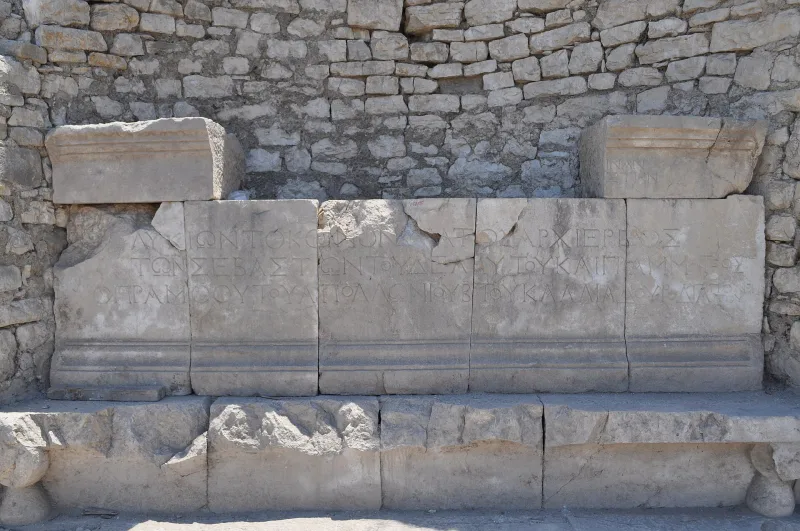
Ophramas, the most famous native of Rhodiopolis, lived during this same period. Following the devastating earthquake of 140–143 CE, he donated approximately 500,000 denarii toward the restoration of 28 Lycian cities and financed the construction of two temples in his hometown. A monument in his honor, erected next to the theater, bears the longest inscription in all of Lycia—a detailed list of his charitable deeds and the honors he received.

Another famous resident was Heraclitus—an orator and expert in medicine. According to inscriptions, the central cult of the city during the Hellenistic and Roman periods was the cult of Athena Polia. In late antiquity, Rhodiopolis became part of the province of Lycia; its episcopal see was suffragan to Myra. Only one bishop is known—Nicholas, who attended the Council of Constantinople in 518.

The city was discovered in 1842 by the traveler T. A. B. Spratt. In 1894, a group led by E. Krick compiled the first detailed documentation of the Ophramoas inscriptions. In 2005, the area was devastated by a severe forest fire. Systematic excavations began in 2006 under the direction of Nevzat Çevik of Akdeniz University, with the support of the Turkish Ministry of Culture.

Architecture and What to See

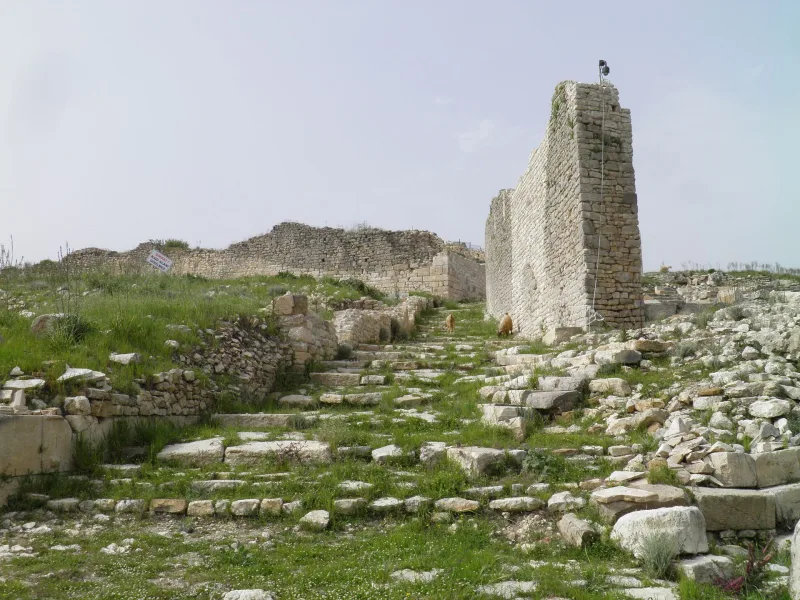
Rhodiopolis is one of the most compact and unconventionally planned ancient cities of Lycia. Its distinctive feature is the almost complete absence of open space: streets, buildings, and cisterns are fitted together with masterful precision, dictated by the steep slope of the hill.

The Great Baths

The Great Baths are the city’s main excavated structure. They cover an area of 1,077 square meters and date to the 2nd century CE. The baths were deliberately situated at the lower edge of the hill: it was here that water under the greatest pressure could supply the thermal baths, and the structure’s dimensions did not allow for it to be placed higher. The complex includes a caldarium, a tepidarium, and a frigidarium with windows facing south—to maximize the use of daylight and solar heat. The eastern wall has been preserved up to the level of the vault.

Monument to Opraomos

Near the theater stands a monument to the wealthiest Lycian benefactor—Opramoas. The monument’s walls are entirely covered with inscriptions: this is the longest text found in Lycia. It lists donations totaling about 500,000 denarii to 28 cities for reconstruction following the earthquake of 140–143 CE, as well as all the honors bestowed upon Ophramoas by the grateful cities and the Roman emperor.

The Agora and the Theater

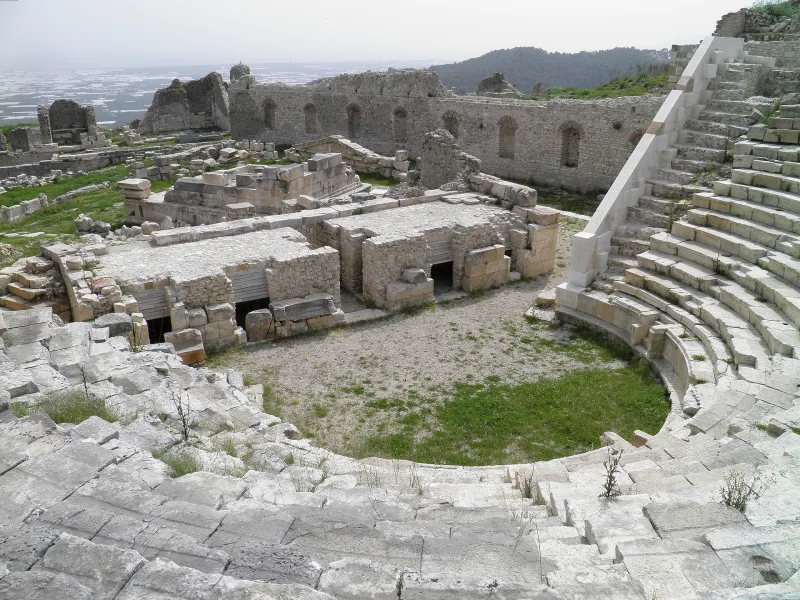
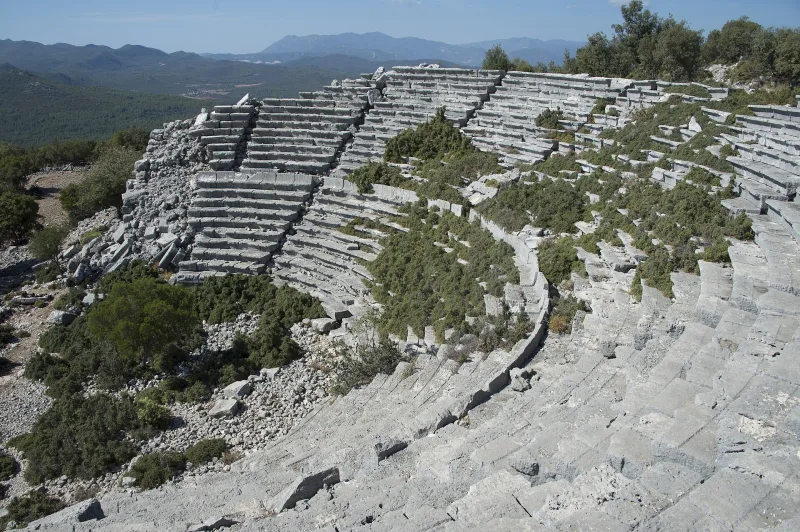
The Agora of Rhodiopolis is an important monument despite the city’s small size. The two-story stoa and the statue of Ophramoas form a commercial and social center. The theater is the only structure from the Late Hellenistic period to have survived the later Roman reconstructions. In 2011, a Lycian necropolis dating to approximately 300 BCE was discovered.

Cisterns as an engineering system

A unique feature of Rhodiopolis: there was no space to build an aqueduct, so all water was stored in cisterns carved directly into the rock. These same cisterns simultaneously served as foundations and terraces for buildings—a solution that combined engineering and urban planning in a single element. It is noteworthy that the “aqueduct supports” previously identified within the city turned out to be Roman chamber tombs.

Interesting Facts and Legends

  • In 2017, the restoration of a temple near the theater caused a scandal: workers with no restoration experience were employed, some stones were laid in the wrong direction, and Italian marble was used instead of local stone. This incident sparked a broad discussion about methods for restoring ancient monuments in Turkey.
  • Ophramas donated money to 28 Lycian cities—and none of them was his hometown. This is an example of the Greek and Roman practice of “philanthropy”: a wealthy citizen voluntarily funded public needs, receiving honor and posthumous remembrance in return. The monument in Rhodiopolis is the best-preserved example of this system in all of Asia Minor.
  • The only known bishop of Rhodiopolis bore the name Nicholas—the same as that of Lycia’s most famous native, Nicholas of Myra (Santa Claus). The coincidence of the name is no accident: Nicholas was one of the most revered names in early Byzantine Lycia.
  • The city was founded by colonists from Rhodes, but, according to researchers, it minted its own silver coins—a rare privilege for a small Lycian polis with a single vote in the League.

How to get there

Rhodiopolis is located in Lycia, on a hill northwest of Kumluca in the province of Antalya. The nearest major airport is Antalya (AYT), about 90 km west by road. Buses run from Antalya to Kumludja; the trip takes about 1.5–2 hours. From Kumludja to the ruins—approximately 5–7 km along a dirt road; it’s best to get there by rental car. From Kas and Demre (Myra)—about an hour’s drive east along a scenic coastal route.

The site is not fenced off, and admission is free. It is most convenient to plan a visit in combination with Kumluca, Demre—Myra, and Hierapolis of Kastabala as a single itinerary along the Lycian coast.

Tips for travelers

The best time to visit is spring and fall: in April–May, the hillsides are covered with blooming maquis, and in October, the light is soft and golden. It gets very hot on the hill in summer; sunscreen and water are essential year-round. There are no signposts at the site—it’s best to download a GPS track in advance.

Bring binoculars: the inscriptions of Opraamos on the monument are detailed, and it’s more interesting to make out the letters up close than in photographs. Local farmers’ goats sometimes graze near the ruins—a common sight in these Lycian areas untouched by tourists. Wear sturdy shoes: the slopes are rocky and slippery after rain. It’s convenient to combine a visit to Rhodiopolis with the nearby Lycian rock tombs near Kumludja—they’re a half-hour drive away and together offer a comprehensive view of Lycian funerary culture.
Your comfort is important to us, click on the desired marker to create a route.
Meeting for minutes before
Yesterday. 17:48
Frequently asked questions — Rhodiapolis—an ancient Lycian city and the patron of Ophramas in Turkey Answers to frequently asked questions about Rhodiapolis—an ancient Lycian city and the patron of Ophramas in Turkey. Information about the service's operation, capabilities, and use.
Rhodiapolis is a small ancient hilltop town in the province of Antalya, founded—according to the prevailing theory—by colonists from the island of Rhodes. Its main feature is its exceptional compactness and unconventional layout: the steep terrain of the hill forced ancient architects to combine cisterns, foundations, and terraces into a single engineering system. In the Lycian League, the city had only one vote, yet it was here that the wealthiest philanthropist of the ancient world, Opraomos, lived; his monument bears the longest inscription in all of Lycia.
No, the ruins are not fenced off and admission is free. There are no ticket booths or security personnel on site. This is typical of small, less touristy Lycian monuments. However, this is precisely why the infrastructure here is minimal: there are no signs, restrooms, cafes, or souvenir shops.
Opraoas was the most famous native of Rhodiopolis, who lived in the 2nd century CE. Following the devastating earthquake of 140–143, he donated approximately 500,000 denarii toward the reconstruction of 28 Lycian cities and also financed the construction of two temples in his hometown. The walls of his monument, erected next to the theater, are entirely covered with inscriptions—this is the longest text found in Lycia and one of the best-preserved documents of the practice of evergetism in all of Asia Minor.
The Greek name Ῥοδιάπολις literally translates as “City of Rhodes.” According to the prevailing scholarly view, the settlement was founded by colonists from the island of Rhodes—a powerful maritime city-state of the Aegean world. Ancient authors referred to the city by various names: Ptolemy and Stephanus of Byzantium called it Rhodia, Pliny the Elder called it Rhodiopolis, while the form Rhodiapolis consistently appears on coins and in inscriptions.
The site is in moderate condition. The best-preserved and most accessible structures are the 2nd-century CE Great Baths, covering an area of over 1,000 square meters—the eastern wall has survived almost to the level of the vault. Also visible are the agora, the stoa, a theater from the Late Hellenistic period, and the monument of Opraamoas with inscriptions. In 2005, the area was devastated by a severe forest fire, and systematic excavations have only been underway since 2006, so some of the structures have not yet been uncovered.
Since the hill’s terrain made it impossible to build an aqueduct, the residents of Rodiapol carved a complex system of cisterns directly into the rock. These reservoirs served simultaneously as foundations and terraces for buildings—in other words, a single structure fulfilled three functions at once: water storage, structural support, and slope stabilization. It is noteworthy that the “aqueduct supports” previously observed on the site turned out to be Roman chamber tombs.
The city was first brought to the attention of European scholars in 1842 by the traveler T. A. B. Spratt. In 1894, a team led by E. Krick compiled the first detailed documentation of the inscriptions at Opraamoas. Systematic archaeological excavations began much later—in 2006—under the direction of Nevzat Çevik of Akdeniz University, with the support of the Turkish Ministry of Culture.
Yes. The nearest sites are the Lycian rock tombs near Kumludj (about a half-hour drive), which offer insight into the local burial customs. A little further away are Demre with Myra and the Church of St. Nicholas, as well as Hierapolis of Kastabala. All of these sites are part of a single route along the Lycian coast, allowing you to spend a full, productive day in the region.
This site requires physical exertion: the hillsides are rocky and slippery after rain, and there are no official trails or signs. For older children and active adults, this is an exciting adventure. For older people or tourists with limited mobility, the uneven terrain may make the hike difficult. In any case, sturdy, non-slip footwear is required for everyone.
Yes. During the late antique period, Rhodiapolis became part of the province of Lycia and had a bishopric subordinate to Myra. Only one specific bishop is known—Nicholas, who attended the Council of Constantinople in 518. The name Nicholas was widespread in early Byzantine Lycia—it was also borne by the region’s most famous native son, Nicholas of Myra.
Yes. In 2017, the restoration of the temple near the theater drew criticism from experts: workers with no restoration experience were hired for the job, some of the stones were laid in the wrong direction, and Italian marble was used instead of local stone. This incident sparked a broad discussion about the ethics and methods of restoring ancient monuments in Turkey.
Yes, according to researchers, Rhodiapolis minted its own silver coins—a rare privilege for a small city-state with a single vote in the Lycian League. This suggests that, despite its modest political influence, the city enjoyed a certain degree of economic independence and status.
User manual — Rhodiapolis—an ancient Lycian city and the patron of Ophramas in Turkey Rhodiapolis—an ancient Lycian city and the patron of Ophramas in Turkey User Guide with a description of the main functions, features, and principles of use.
The best times to visit are spring (April–May) and fall (September–October). In spring, the hillside is covered with blooming macchia, and in fall, the light is soft and golden. In summer, the exposed rocky slopes get very hot, making the hike quite strenuous. Plan your visit for the morning to avoid the peak heat.
The nearest major airport is Antalya (AYT), about 90 km away. There are buses running from Antalya to Kumluca; the trip takes about 1.5–2 hours. If you’re coming from Kaş or Demre (Myra), the drive will take about an hour along a scenic coastal route.
It’s about 5–7 km from Kumludzha to Rodiopol along a dirt road. The best option is to rent a car: there’s no public transportation to the ruins, and while you can find taxis in Kumludzha, be sure to arrange your return trip in advance. Download the GPS track for the route ahead of time—there are no road signs.
Be sure to bring plenty of water—there are no shops or cafes near the ruins. Wear sturdy shoes with non-slip soles: the slopes are rocky and slippery after rain. Sunscreen is a must in any season. Binoculars will come in handy for reading the inscriptions on the Opra Moasa monument. Cell service in the area can be unreliable—download a map and route offline.
There are no official signs or marked trails in the area. Use a GPS track you’ve downloaded in advance. Start your tour at the bottom of the hill, where the Great Baths are located—the most extensively excavated and visually striking structure. Head up the slope toward the agora, the theater, and the monument to Opra Moas. Take note of the cisterns carved into the rock—they are often hidden right under your feet.
The recommended minimum time for visiting the site is 90 minutes. Key sites: the 2nd-century Great Baths (lower level), the monument of Opraamos with inscriptions (near the theater), the Late Hellenistic-period theater itself, the agora, and the stoas. If you’re interested in the engineering aspects, be sure to take time to explore the rock-cut cisterns, which also served as building foundations.
Rhodiopolis can easily be combined with nearby attractions in a single day. The Lycian rock tombs near Kumludja are a half-hour drive away. Demre, with Myra and the Church of St. Nicholas, is about an hour’s drive away. This itinerary covers ancient architecture, Lycian funerary culture, and the region’s early Christian heritage all at once, without overloading the day with travel.