Metropolis—the Ionian city of the Mother Goddess near Izmir

Metropolis—the City of the Mother Goddess in the Ionian Valley

Forty kilometers southeast of Izmir, in the municipality of Torbalı near the village of Yeniköy, on Bademgediği Tepe hill, stand the ruins of a city that ancient authors simply called “Metropolis”—“Mother City.” Metropolis is not a bustling metropolis, but a quiet Ionian settlement where the Mother Goddess was worshipped, where fugitives from the fallen city of Arzawa took refuge during the Hittite era, and where one of the world’s two known temples of Ares stood during the Hellenistic period. The site has been under investigation since 1972, but it still holds surprises: in 2021, a marble statue of a woman was discovered, and in 2025, an agora that had stood until the 5th–6th centuries CE.

History and Origins of Metropolis

Settlement of Bademgediği Tepe began in the Neolithic period; the first inhabitants were influenced by the Trojan-coastal culture of Troy I. The city is rich in traces of all subsequent eras—from the Late Bronze Age to the Ottoman period.

In the Late Bronze Age, around the end of the 14th century BCE, this site, then known by the Hittite name Puranda, is mentioned in the “Annals of Mursilis II.” After the Hittite king Mursilis conquered the capital of Arzawa—the city of Apasas (later Ephesus), located 30 km to the southwest—the fugitives Khursanasan, Surudan, and Attarimmann took refuge in Puranda. The Arzawa prince Tapalazunauli, who had fled to the islands during the invasion, also went there. Mursilis captured Puranda, Tapalazunauli fled with his family—and this chapter in the history of Metropolis came to a close.

Remains of Mycenaean culture have been discovered on the same hill: a significant amount of local Mycenaean pottery dates to the 14th–12th centuries BCE. Particularly noteworthy is the find from Bademgediği Tepe—an image of a ship on a vessel, which is considered an important source for understanding the development of shipbuilding and naval iconography during the Bronze Age.

During the Hellenistic period, Metopolis was part of the Kingdom of Pergamon and reached its zenith. Strabo mentioned the city among the settlements of the Caistrus Plain in Lydia: on the road from Smyrna to Ephesus, 120 stadia from Ephesus and 180 from Smyrna. He also noted that the Metropolis region produced excellent wine. During the Roman period, the city was heavily “Romanized”; layers from Rome and Byzantium were superimposed upon the Hellenistic foundation. A church stands east of the city; the fortress walls from the later period connect with the Hellenistic fortifications of the acropolis.

Architecture and What to See

The theater and the marble seat with griffins

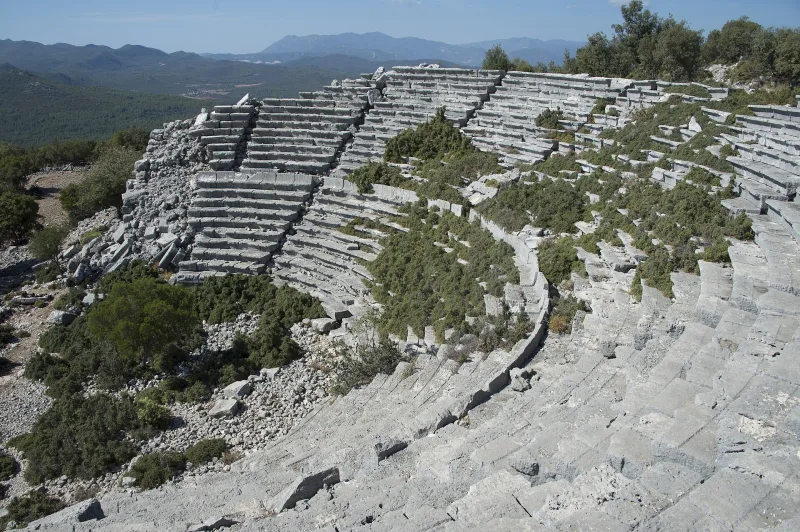
In 1995, archaeologists discovered a marble honorary seat from the Hellenistic period, decorated with griffins, in the ancient theater—one of the rarest examples of such an object. The original is kept at the Izmir Archaeological Museum; an exact replica has been installed in the theater. The theater is open to visitors: although it is not as large as the one in Ephesus, the atmosphere itself—the hill overlooking the valley, the rows of stone steps—is compelling.

Temple of Ares

Metropolis is the site of one of the two temples of Ares, the god of war, known to science. The cult of Ares was significantly less widespread than the cults of Zeus or Apollo; this is precisely why the temple here is a rarity on a global scale. Excavations have revealed its layout and the remains of the structure.

The Agora and Late Antique Layers

In 2025, an agora was uncovered on the southern slopes of the city. According to experts, it functioned until the 5th–6th centuries CE and likely fell into disuse due to an earthquake. This discovery radically refines our understanding of the duration of active urban life in Metropolis.

The 2021 Marble Statue

In June 2021, a well-preserved marble statue of a standing woman on a pedestal, approximately 1,800 years old, was found in the Torbalı district. The head and both arms were missing. Nevertheless, the quality of the torso and the drapery reveals the hand of an experienced Roman-era master; the statue became a significant find for understanding sculptural production in Ionia during the 2nd–3rd centuries CE.

Topography and Hellenistic Fortifications of the Acropolis

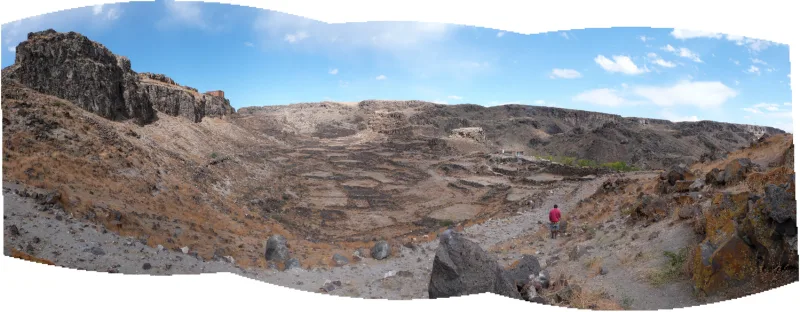
The visible part of the site consists primarily of a Hellenistic city with strong “Roman” modifications. The walls and towers of the acropolis are clearly visible in the terrain; later Christian fortifications partially overlap and utilize the Hellenistic foundations. A walk along the perimeter allows one to trace how each era reinterpreted the previous one.

Interesting Facts and Legends

Metropolis is a city where every excavation season brings new discoveries.

  • The Hittite name of the city—Puranda—appears in the “Annals of Mursilis II,” one of the most important sources on Hittite history. This makes Metropolis one of the few Ionian cities with a reliably identified Hittite name.
  • The marble honorary chair with griffins, discovered in 1995, is one of the rarest artifacts of its kind preserved in Asia Minor; the original is in the Izmir Museum.
  • The Temple of Ares here is one of only two known monuments of its kind in the world. Ares was the god of war, but his cult was significantly less widespread than the cults of the Olympian patron gods of cities.
  • The depiction of a ship on a Mycenaean vessel from Bademgediği Tepe is an important source for the history of Late Bronze Age shipbuilding in the Aegean region.
  • The Agora, discovered in 2025, rewrites the chronology: the city continued to function actively at least until the 5th–6th centuries CE, much longer than previously thought.

How to get there

The site is located near the village of Yeniköy in the municipality of Torbalı, approximately 40 km southeast of Izmir. From Adnan Menderes Airport (ADB)—take a taxi or a rental car toward Torbalı; the journey takes about 30–35 minutes. From Izmir, buses run to Torbalı from the Üçkuyular bus station; from Torbalı to the village of Yeniköy, take a local taxi or walk about 3 km.

GPS coordinates: 38°07′N 27°19′E. The official excavation website (metropoliskazilari.com) publishes the current schedule. It’s convenient to combine this with a visit to Ephesus (about 30 km south)—both sites can be included in a single day trip from Izmir.

Tips for travelers

Metropolis is an actively excavated open-air site, not a museum park. During the summer season (May–September), archaeologists are at work here; the opportunity to observe the process firsthand is a rare experience. Outside of the season, the site may be partially closed; check in advance.

Shoes with sturdy soles are required: the terrain is uneven. Be sure to bring water and a hat—there is little shade. Admission is usually free (check on-site), but the area is fenced off, and visiting hours are regulated during the active season.

For lovers of Ionian history, Metropolis reveals an unexpected perspective: this is not the “grand” Ephesus, but a deep insight into how second-tier cities lived, those not included on tourist itineraries. Visit the Izmir Archaeological Museum to see the original ceremonial chair with griffins and other finds from Metropolis—this will complete the picture. Metropolis attracts precisely those who are curious about what lies behind the glamour of famous names.
Your comfort is important to us, click on the desired marker to create a route.
Meeting for minutes before
Yesterday. 17:48
Frequently asked questions — Metropolis—the Ionian city of the Mother Goddess near Izmir Answers to frequently asked questions about Metropolis—the Ionian city of the Mother Goddess near Izmir. Information about the service's operation, capabilities, and use.
In ancient times, the word “Metropolis” meant “Mother City”—not an administrative capital, but a settlement regarded as the mother of others. Metropolis in Ionia was a quiet regional town where the Mother Goddess was worshipped, not a major political center. This is precisely what distinguishes it from the modern meaning of the word.
Puranda is the Hittite name for the hill known as Bademgediği Tepe, beneath which lie the ruins of Metopolis. It is mentioned in the “Annals of Mursilis II” in connection with the conquest of the kingdom of Arzawa around the end of the 14th century BCE. This makes Metopolis one of the few Ionian cities whose Hittite name has been reliably identified—a rarity for the region.
Metropolis is the site of one of only two temples dedicated to Ares, the god of war, known to science. The cult of Ares was far less widespread than those of Zeus, Apollo, or Athena: most Greek cities did not build separate temples for him. This is precisely why this site is of exceptional importance to the history of ancient religion.
In 2025, an agora was excavated on the southern slopes of the ancient settlement. According to experts, it remained in use until the 5th–6th centuries CE and likely fell into disuse following an earthquake. This discovery radically changes our understanding of the city’s history: Metropol turned out to have been actively inhabited for much longer than previously thought.
In June 2021, a well-preserved marble statue of a standing woman on a pedestal, dating back approximately 1,800 years, was discovered in the Torbalı district. Although the statue’s head and arms were missing, the quality of the torso and the clothing suggests the work of a skilled craftsman from the Roman period of the 2nd–3rd centuries CE.
In 1995, a marble honorary seat from the Hellenistic period, decorated with griffins, was discovered at the Metropol Theater—one of the rarest artifacts of its kind in Asia Minor. The original is housed in the İzmir Archaeology Museum (İzmir Arkeoloji Müzesi). An exact replica has been installed in the theater itself and can be viewed on site.
Generally, admission to the Metropol excavation site is free, but the area is fenced off. During the active archaeological season (primarily in the summer), specific visiting hours apply. Before your visit, we recommend checking the current conditions on the excavation site’s official website, metropoliskazilari.com.
Yes, this is one of Metropol’s main features. From May through September, excavation teams are actively at work here, and watching the excavations in person is a rare experience not available in most “museum-like” ancient cities. Outside of this period, parts of the site may be closed, so it’s worth checking the schedule in advance.
A fragment of a vessel depicting a ship, found on Bademgediği Tepe and dated to the 14th–12th centuries BCE, is considered an important source for understanding the history of shipbuilding and naval iconography in the Late Bronze Age of the Aegean region. Such depictions are extremely rare and valuable for reconstructing seafaring practices of that era.
Ephesus is a “flagship” tourist destination with extensive infrastructure, while Metropolis is a living archaeological site without crowds or souvenir shops. It reveals the everyday life of a “second-tier” Ionian city: not festive or monumental, but real. For those interested in the depth of ancient history, rather than just its facade, Metropolis is a worthwhile destination in its own right.
Settlement of the hill began in the Neolithic period. Traces of the Troy I coastal culture, the Late Bronze Age, the Mycenaean culture (14th–12th centuries BCE), and the Hellenistic, Roman, Byzantine, and Ottoman periods can be found there. In fact, the hill has been continuously inhabited for several millennia—which is why every new excavation season yields significant results.
In his *Geography*, Strabo described the Metropolis region as a place where excellent wine was produced. The city was located on the road from Smyrna to Ephesus in the Caistrian Plain of Lydia—a fertile region well-suited for viticulture. This fact points to Metropolis’s economic significance in antiquity, which extended beyond its purely religious role.
User manual — Metropolis—the Ionian city of the Mother Goddess near Izmir Metropolis—the Ionian city of the Mother Goddess near Izmir User Guide with a description of the main functions, features, and principles of use.
The best times to visit are spring (April–May) and fall (September–October): there’s no sweltering summer heat, and the vegetation on the hill is more picturesque. If you’d like to watch the archaeologists at work, plan your trip for May–September. In winter, part of the site may be closed, so check the schedule in advance at metropoliskazilari.com.
Metropol is an active archaeological site, not a museum park with fixed hours. Before your visit, check the official website at metropoliskazilari.com or call the Torbalı municipality to find out the current visiting hours, security arrangements, and any restrictions. This will save you time in case the site is closed on the day you plan to visit.
The most convenient way to get from Izmir to Torbalı is by rental car—it’s about 40 km (30–35 minutes on the highway). An alternative is to take a bus from the Üçkuyular bus station heading toward Torbalı. If you’re flying through Adnan Menderes Airport (ADB), it’s even closer to Torbalı, and it’s easier to take a taxi from there.
It’s about 3 km from the center of Torbalı to the village of Yeniköy, at the foot of Bademgediği Tepe. You can take a local taxi or walk there if you have time. GPS coordinates for your navigation system: 38°07′N 27°19′E. The road to the hill is unpaved, so if you’re driving, it’s best to choose an SUV or take your time.
Be sure to bring plenty of water—there is virtually no shade on the hill. Closed-toe shoes with sturdy soles are a must: the terrain is uneven, with rocky outcrops and steep sections. A hat and sunscreen are essential from April through October. There are no cafes or shops in the immediate vicinity.
Start at the theater: here you’ll find a replica of the famous griffin-adorned chair, and the view from the hill down into the valley reveals the scale of the ancient settlement. Then head to the ruins of the Temple of Ares—one of only two known to exist in the world. Walk around the walls and towers of the acropolis to see how the Hellenistic fortifications transition into Late Antique and Byzantine ones. If excavations are underway, you can watch the expedition at work on the southern slopes, where the agora was uncovered in 2025.
Metropolis and Ephesus can easily be combined into a one-day itinerary from Izmir: the two sites are about 30 km apart. Start with Metropolis in the morning, before the midday heat sets in, then head toward Ephesus. Keep in mind that Ephesus requires at least 2–3 hours, while Metropolis takes about 90 minutes. All in all, a full day for both sites, including travel time, is a realistic plan.
To get the full picture, visit the İzmir Archaeology Museum: it houses the original marble honorary chair with griffins from the Metropol Theater, as well as other finds from the excavations. The museum is located in the center of İzmir and is open daily except Mondays. It’s a logical final stop on the itinerary, transforming your archaeological impressions into tangible artifacts.