The Milas Museum: A Gateway to the Treasures of Caria
The provincial town of Milas in Muğla Province is known to most tourists only as a stopover on the way to Bodrum or the archaeological sites. But it is here that the Milas Museum (Milas Müzesi) has been operating since 1987—a repository of artifacts from the most important Carian sites: Stratonicea, Iasos, Damlıboğaz (Hydai), and Beçin. Its two-story building, featuring a courtyard spanning 1.5 decares, houses over 3,000 archaeological objects, 164 ethnographic exhibits, and 1,174 coins. For those seriously interested in the history of Caria, the Milas Museum is not an option but a necessity: it is here that items found at excavation sites—which are often inaccessible or poorly lit—are preserved.
History and Origins of the Milas Museum
Milas is the ancient Mylasa, one of the largest cities of Caria. It was the birthplace of the ruling Hecatomnid dynasty, which built the Mausoleum at Halicarnassus (Bodrum) in the 4th century BCE the Mausoleum at Halicarnassus (Bodrum)—one of the Seven Wonders of the Ancient World—and actively developed the religious centers of Labanda and Lagina. The region is rich in historical monuments, many of which for a long time lacked a local repository for their finds.
In 1987, the Milas Museum was opened—a regional museum created to organize and store artifacts from several major Carian sites. The museum occupies a two-story building with a spacious courtyard (1.5 decares), allowing large-scale stone finds—architectural fragments, tombstones, and sculptures—to be displayed outdoors in the courtyard garden.
The collection’s sources are four key Carian monuments. Stratonicea—a Hellenistic polis that later became an important religious and administrative center; today, its ruins, located 11 km from Lagina, partially protrude from the ground right within the residential area of the village of Eskihisar. Iasos—a coastal city on a peninsula in Güllük Bay, settled as early as the Minoan era and a major center for the fish trade in antiquity. Damlıboğaz (Hydai)—a Carian settlement in the mountainous region of the province. Beçin is a medieval acropolis and castle 5 km from Milas, where monuments from the 13th–15th-century Menteşe Beylik are concentrated.
Thus, the museum spans a time range from prehistoric eras to the Middle Ages, reflecting the multi-layered history of one of Turkey’s most culturally rich regions.
Architecture and What to See
Archaeological collection: 3,025 items
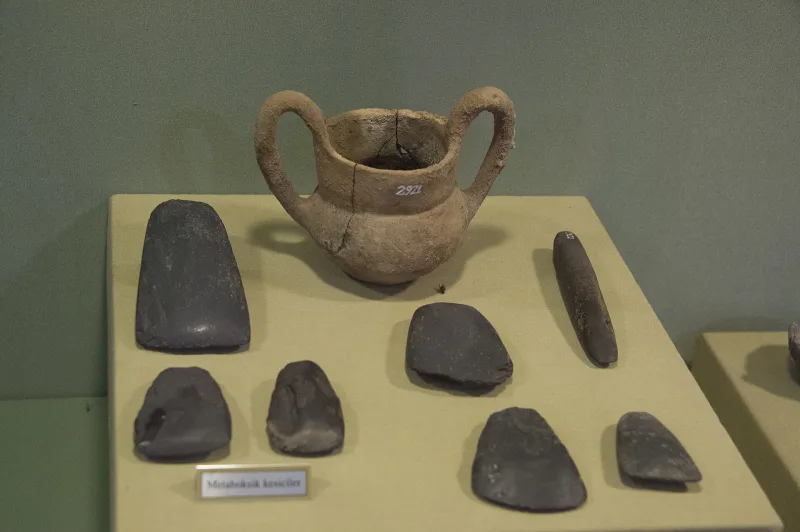
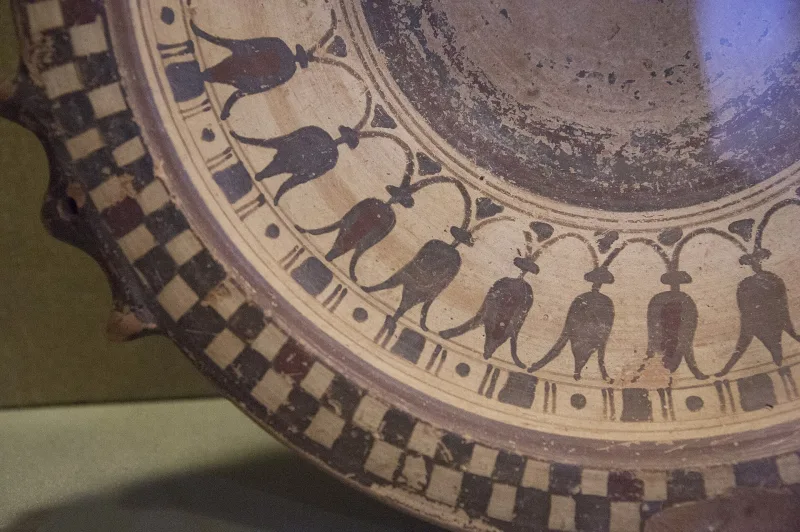
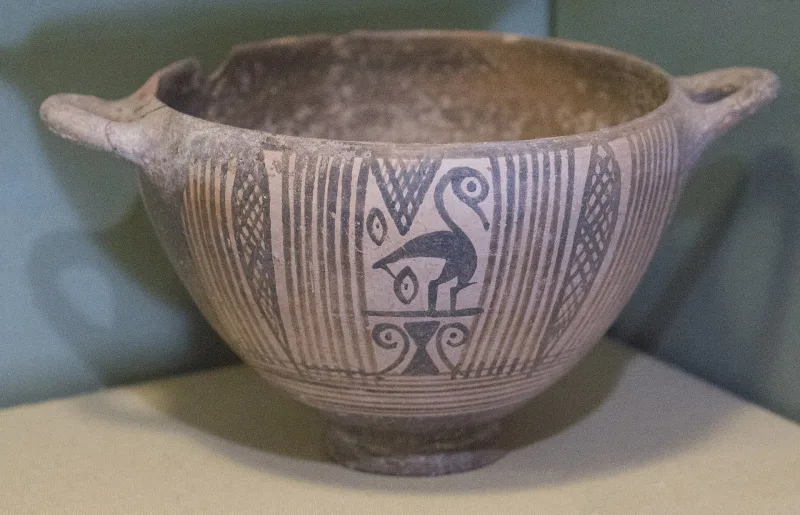
The core of the museum consists of 3,025 archaeological artifacts. The collection includes items from the Bronze Age, the Late Hellenistic, Roman, and Early Byzantine periods, found at the excavation sites of Stratonicea, Iasos, and other monuments. Among the exhibits are sculptures, terracotta, jewelry, ceramic vessels, and stone reliefs. Of particular interest are funerary stelae with inscriptions in Greek and Carian: Caria is one of the few regions where the Carian script has survived well enough to be deciphered.
Numismatic Collection: 1,174 coins
The coin collection—1,174 specimens—spans the period from archaic Greek coinage to Ottoman dirhams. Carian city-states minted coins bearing images of local gods and rulers; some coins from Stratonicea feature the image of the goddess Hecate, which directly echoes that of neighboring Lagina. The numismatic hall is a miniature atlas of the region’s history: shifts in power and cultural influences can be traced through the metal and images, literally century by century.
Ethnographic Collection: 164 items
164 ethnographic items document the daily life and crafts of Caria and Muğla during the late Ottoman and early Republican periods. Traditional textiles, jewelry, metal and woodwork, and household items—this part of the exhibition completes the picture, showing the region’s life from a historical perspective not only through coins and sculptures, but also through objects of everyday culture.
Courtyard with Stone Finds
The open courtyard, covering an area of 1.5 decares, provides space for large stone artifacts—sarcophagi, architectural blocks, tombstones, and column bases. A walk through the courtyard is an excursion in itself: stones from different eras are arranged in chronological or thematic order, and they can be viewed without the glass and hustle of enclosed halls.
Connection to Stratonicea and Labraunda
Most of the key finds from Stratonicea (inscriptions, coins, reliefs) and some of the objects excavated near Labraunda are housed right here. For those planning a visit to these excavations, a trip to the museum before or after is a must: there you see the ruins and their context; here, you see the artifacts themselves.
Interesting Facts and Legends
The Milas Museum is small, but it has its own history of unexpected finds and unique collections.
- The coin collection, comprising 1,174 pieces, includes coins minted by several Carian city-states, including Stratonicea with its coins featuring Hecate—the goddess whose main temple stood in neighboring Lagina.
- Among the sources of the collection is Iasos, a coastal city with a history dating back to the Minoan era. Its finds demonstrate just how close the ties between Caria and Cretan civilization were as early as the 2nd millennium BCE.
- Beçin—a medieval castle of the Menteşe Beylik located 5 km from Milas—is represented in the museum by ethnographic artifacts; this is a rare instance where Hittite pottery shards and medieval Muslim weapons coexist in a single museum.
- The courtyard garden, featuring large stone artifacts, allows visitors to view tombstones and architectural blocks at life-size without glass display cases—a rarity for regional museums.
- The museum opened in 1987—relatively late for such a rich regional center, which explains why a number of key finds from Milas and the surrounding area historically ended up in Istanbul, Bodrum, and museums abroad.
How to Get There
The Milas Museum is located in the center of Milas (Muğla Province) at the address corresponding to the coordinates 37°18′48″N 27°47′03″E. The nearest airport is Milas-Bodrum (BJV), about 25 km from Milas. From the airport, it takes about 30 minutes by taxi or havola bus to the Milas bus station; from there, you can walk or take a taxi to the museum.
Dolmus and buses run regularly from Bodrum to Milas (about 40–50 minutes). The museum’s GPS coordinates are 37°18′N 27°47′E. Parking is available at the museum. It’s convenient to combine this with a day trip: Labraunda (14 km north) → Stratonicea (11 km) → Milas Museum. A rental car is required to visit all the sites.
Tips for travelers
The Milas Museum is small—a full tour takes 1–1.5 hours. Start with the numismatic hall: the coins provide a chronological “map” of the region, after which the other halls make more sense. Save the courtyard with the stone exhibits for last, once you have the context.
Check opening hours and prices with the Turkish Ministry of Culture or local tourism resources—the museum is open daily during the season, but hours may be reduced off-season. Captions on the exhibits are in Turkish; if you don’t read Turkish, bring a printout of key terms or install an offline translator.
The Milas Museum is the best place in the region to compare artifacts from various Carian sites in a single location. If you plan to visit Stratonicea, Labraunda, or Iasos, the Milas Museum makes for an ideal introduction or conclusion to your itinerary.